The ‘Peasant’ Remark: How Not to Negotiate with China – Risk Management Lessons

In the aftermath of the 2025 U.S. tariff escalation, tensions with China have reached a boiling point not just economically with tit-for-tat responses from the Beijing, but also diplomatically and even more deeply in the cultural space. While President Trump’s sweeping tariffs may have been intended to force a global trade reset by pushing world leaders to renegotiate trade agreements seen as unfair by the US administration, recent comments from Vice President J.D. Vance far from encouraging constructive discussions, have on the contrary, added significant fuel to an already volatile fire.

In a high-profile speech, Vance referred to the Chinese as “peasants from whom the U.S. borrow money to buy the goods the chinese peasants manufacture” adding that “it is not a recipe for economic prosperity”.  The reaction from Beijing was immediate and angry. The Chinese Foreign Ministry condemned the remark as “ignorant and impolite.”

Continue reading
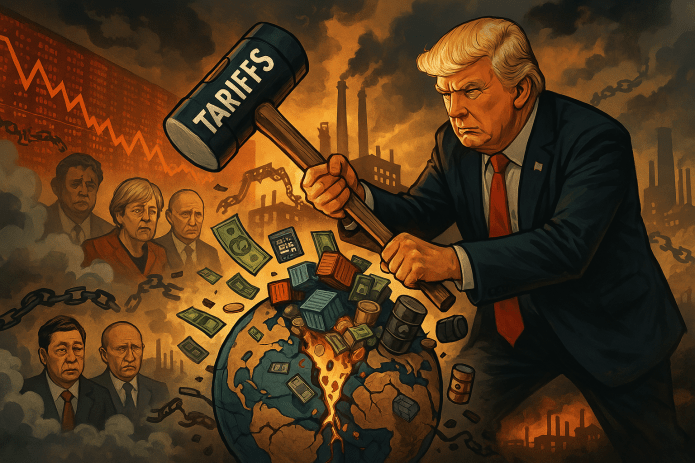
Impacts of Trumps Tariffs on the world

Reassessing Trump’s Tariffs from a Risk Management Perspective: A Reckless Gamble or Necessary Disruption?

In April 2025, President Donald Trump stunned global markets and diplomatic circles by announcing sweeping tariffs ranging from 10% to nearly 100% on imports from virtually all countries. Dubbed “Liberation Day” tariffs by the U.S. administration, the move triggered an immediate and intense backlash. Politicians, media pundits, and economists around the world denounced the action as reckless, economically unsound, and potentially disastrous for the global economy.

But such a one-dimensional, knee-jerk reaction may itself be dangerously shortsighted. From a risk management perspective, it is precisely in moments like this, when established norms are shaken, that we must resist emotional reactions and instead engage in cool-headed analysis. We need to pause, reflect, and ask deeper questions:

Continue reading

Narrative Walls: The Roadblocks on the Path for Peace in Ukraine

Hundreds of thousands of soldiers have died on both sides. Millions of Ukrainians have been displaced, scattered across Europe. Entire regions ravaged by war lie in ruins. Ukraine’s economy is effectively on life support, dependent on foreign aid. Russia, too, faces deep losses and isolation. And yet, the war continues with only a barely flickering flame lighting up a tortuous path towards peace.

That flickering light is primarily due to the forceful actions of a new ‘peace broker’ in town, US President Trump, who is now trying to twist the arms of both sides to broker a ceasefire deal and bring the warring parties around the same table. That’s not easy! The challenge is not that peace is impossible in itself. It’s that even the possibility of peace has gradually been buried beneath the rubble of hardened ideologies, pain, losses, raw emotions, and distrust expressed in mutually exclusive narratives. The real tragedy may not just be the terrible loss of lives and territory but also the loss of the ability to see the other side as anything else than mortal enemies and hence to be unable to imagine peace with them as even a remote possibility.

Continue reading
Voting does not count

A DEMOCRATIC BREAKDOWN IN EUROPE

A Case Study of the 2024/2025 Romanian Presidential Election 

What happens when the clear frontrunner in a presidential election is prevented from running when the election is abruptly cancelled just days before the second round of the vote?

This isn’t a scene from a political thriller. It’s the reality unfolding in Romania, a member of the European Union (EU). The 2024/25 Romanian presidential election presents a sobering case study that raises questions not only for Romania’s democratic health but also about some broader, troubling trends affecting the state of democracy across the EU.  While European nations continue to promote democratic values abroad, events like these raise serious concerns about the democratic integrity at home. Let’s look into it.

Continue reading

Better Dead than Alive ? – Assessing Political Risk

Since the announcement late at night by President Obama of the death of Osama Bin Laden during a special broadcast to more than 56 millions viewers, Americans have been celebrating the death of one of their worst enemies and the success of a very daring mission. Continue reading