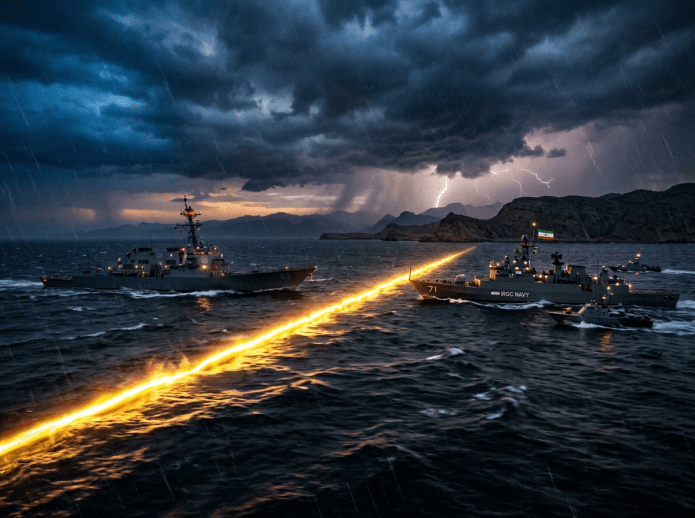
Two warships facing each other with a bright beam between them under dark stormy clouds and lightning

Can a Precarious Ceasefire Still keep the Door Open to Peace? A Risk Management Lens on the US-Iran Negotiations Stalemate

The ceasefire still holds for now. But the logic of war escalation has not been broken.

A few days ago, the two-week ceasefire between the United States and Iran was presented in Washington by Trump with great fanfare as a diplomatic breakthrough, the first step toward de-escalation and perhaps, eventually, peace. The White House narrative was predictable and self-congratulatory: overwhelming pressure had once again created the conditions for diplomacy, proving that force, when applied hard enough, can restore control and deliver a favorable political outcome. The Trump’s formula was familiar. Strike first, raise the cost for the adversary, and then negotiate from a position of restored dominance.

But the promotional wrapping around the ceasefire was quickly torn away by unfolding events. The Islamabad talks ended without agreement, without visible convergence, and without even a next round being scheduled for now. Then came Donald Trump’s declaration that the US Navy would immediately begin a blockade of the Strait of Hormuz. In one move, the meaning of the ceasefire changed fundamentally. A ceasefire with no diplomatic follow-up and a blockade on one of the world’s most sensitive maritime chokepoints is not a peace process. It is not even a stable de-escalation process. It is a more dangerous hybrid condition in which direct strikes are paused while coercive confrontation intensifies through other means. 

Continue reading
The Iran War Trap: How Strategic Miscalculation is Reshaping the Global Risk Landscape and World Order

Introduction: When Power Meets its Limits

After more than a month of war against Iran, a revealing paradox has emerged. The United States and Israel, two of the most powerful military actors in the world, have demonstrated their overwhelming force and destructive capacity. Yet neither has achieved a decisive strategic outcome. Iran did not break. Under sustained attack and extraordinary pressure, it remains standing, retaliating, adapting and this resistance is increasingly becoming central to the global geopolitical narrative surrounding the conflict. 

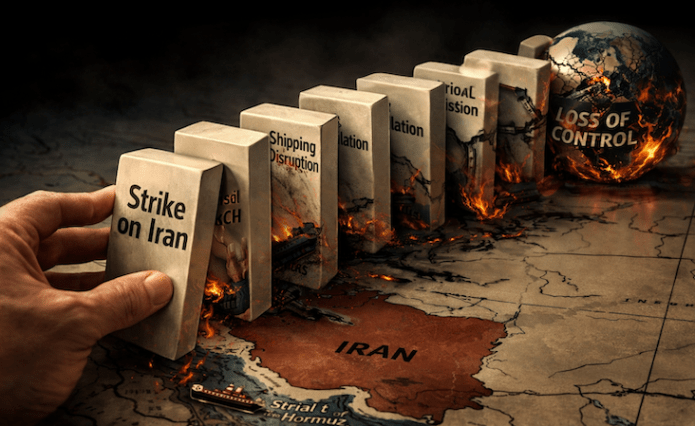
What is unfolding in Iran looks more and more like a case study in strategic risk miscalculation and a lesson about how a war launched as a supposedly controlled demonstration of force to gain leverage can quickly degenerate into self-expanding systemic disruptions with mounting spillovers and global unpredictable risks consequences.

Now the central question is no longer whether Washington and Tel Aviv can keep inflicting damage to Iran. Of course they can. The critical issue is whether this war is still strategically winnable on politically acceptable terms and whether the original justification for war was ever sound in the first place.

Now today’s news reports confirms that the conflict has now moved into a precarious two-week ceasefire phase after Trump stepped back from his latest threats, but the core disputes remain unresolved and the truce itself is fragile. 

That matters because this war is no longer just a war. It is a stress test of strategic judgment, use of coercive power, alliance credibility, and global economic resilience.

Continue reading
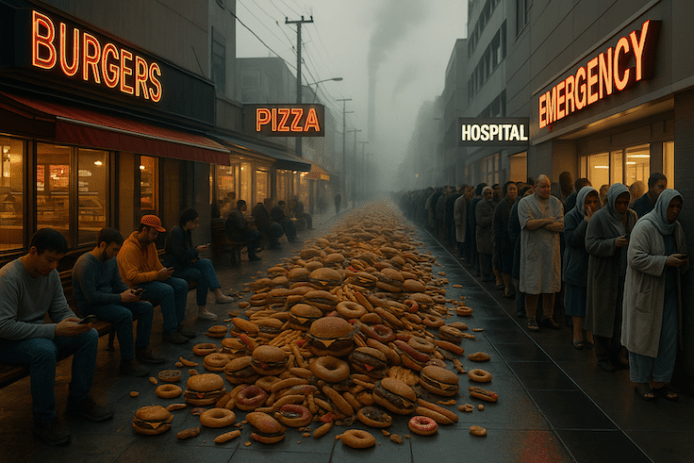
show the link between nutrition and chronic diseases

Confronting the Looming Global Health Crisis: A Flywheel of Chronic Diseases Getting out of Control?

Introduction: The New Silent Pandemic

For most of human history, the primary threats to human life came from infections, accidents, and wars. Today, the biggest killers are chronic diseases such as obesity, diabetes, heart disease, cancer, and mental illnesses which now account for over 75% of global deaths.

Unlike the wars or pandemics of the past, which used to strike with acute and visible devastation but were often geographically confined, this health crisis has crept in silently, escalating slowly at first, building year after year until it now threatens to overwhelm healthcare systems, economies, and even entire societies worldwide.

What makes this coming crisis so insidious is that it is largely a man-made problem and one that could have been prevented if we had conducted a proper risk diagnostic and taken the right preventive actions from the start. Yet, instead of tackling its root causes, governments and healthcare institutions still today remain locked in a vicious cycle of focusing primarily on the consequences and managing them with treatments that do not solve the underlying problem and hence lead to more treatments feeding an endless cycle going nowhere. 

Continue reading

The AI REVOLUTION: The Great Human Enhancement or Replacement: Are We Ready?

Artificial Intelligence (AI) is no longer a futuristic concept, it is here in our present reality, transforming industries, economies, and societies at an unprecedented pace. The launch of ChatGPT (GPT-3.5) by OpenAI in November 2022 was a watershed moment, accelerating AI adoption across sectors such as healthcare, finance, manufacturing, and other services. AI-powered automation is rapidly reshaping business and operating models, redefining the job markets, and sparking intense global competition among corporations and nations. 

While AI presents immense opportunities for business and operational innovation, productivity and growth, it also poses extraordinary risks and challenges. These include concerns over job displacementregulatory gapsethical dilemmasprivacy erosion, and cybersecurity vulnerabilities. Companies and governments now face a critical challenge:

How to harness AI’s potential for transformational growth while mitigating its disruptive impact on human societies? This is one of the most defining challenges we face for the future of humanity.

Continue reading
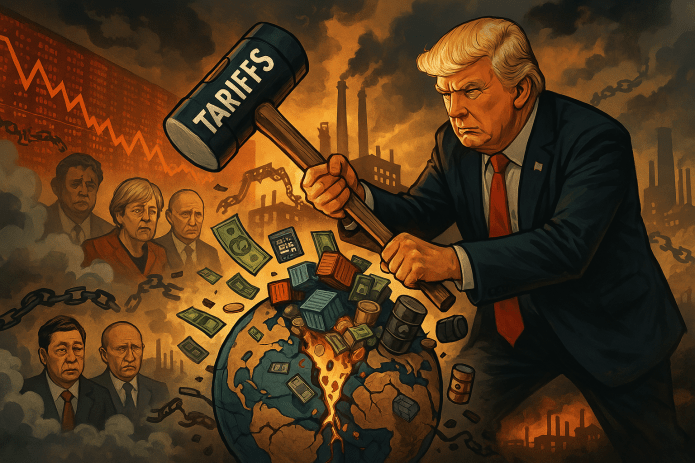
Impacts of Trumps Tariffs on the world

Reassessing Trump’s Tariffs from a Risk Management Perspective: A Reckless Gamble or Necessary Disruption?

In April 2025, President Donald Trump stunned global markets and diplomatic circles by announcing sweeping tariffs ranging from 10% to nearly 100% on imports from virtually all countries. Dubbed “Liberation Day” tariffs by the U.S. administration, the move triggered an immediate and intense backlash. Politicians, media pundits, and economists around the world denounced the action as reckless, economically unsound, and potentially disastrous for the global economy.

But such a one-dimensional, knee-jerk reaction may itself be dangerously shortsighted. From a risk management perspective, it is precisely in moments like this, when established norms are shaken, that we must resist emotional reactions and instead engage in cool-headed analysis. We need to pause, reflect, and ask deeper questions:

Continue reading
Voting does not count

A DEMOCRATIC BREAKDOWN IN EUROPE

A Case Study of the 2024/2025 Romanian Presidential Election 

What happens when the clear frontrunner in a presidential election is prevented from running when the election is abruptly cancelled just days before the second round of the vote?

This isn’t a scene from a political thriller. It’s the reality unfolding in Romania, a member of the European Union (EU). The 2024/25 Romanian presidential election presents a sobering case study that raises questions not only for Romania’s democratic health but also about some broader, troubling trends affecting the state of democracy across the EU.  While European nations continue to promote democratic values abroad, events like these raise serious concerns about the democratic integrity at home. Let’s look into it.

Continue reading

City Harvest Case part 3 – The Opportunity Makes the Thief

Social scientists, psychologists and criminologists generally agree that human behavior is the product of a complex interaction among a wide range of factors. Some of those factors are personal to the individual and others are related to the environment in which the individual evolves. The Fraud Triangle Risk Assessment model that I have been using for this analysis of the CHC case categorize these factors into 3 groups: Pressure, Opportunity and Rationalization.  Continue reading

City Harvest Case part 2: If There is a Fraud What Would be the Motives?

As already mentioned in my previous post City Harvest Case Part 1: Following God or Mammon?, the COC and the prosecution claim that at least SGD 24 millions were illegally diverted from the church building fund and channelled to finance Sun Ho’s attempt to breakthrough on the Hollywood music scene. In order to find out whether there could be any real substance (or not) in the allegations made against the CHC leaders, I will explore this case using a well-tested and recognized Fraud Risk Management Analytical Framework: The Fraud Triangle.  Continue reading

Perception vs Reality: Using stress testing for a PR job

A Stress testing is a form of test that aims to evaluate how a system (financial system) or an entity (a Bank in this case) can cope when subjected to amounts of stress that goes well beyond the ‘normal’ expected operational environment. The goal is to observe the results to determine the resistance range and  breaking point. Continue reading

Better Dead than Alive ? – Assessing Political Risk

Since the announcement late at night by President Obama of the death of Osama Bin Laden during a special broadcast to more than 56 millions viewers, Americans have been celebrating the death of one of their worst enemies and the success of a very daring mission. Continue reading