The Iran War Trap: How Strategic Miscalculation is Reshaping the Global Risk Landscape and World Order

Introduction: When Power Meets its Limits

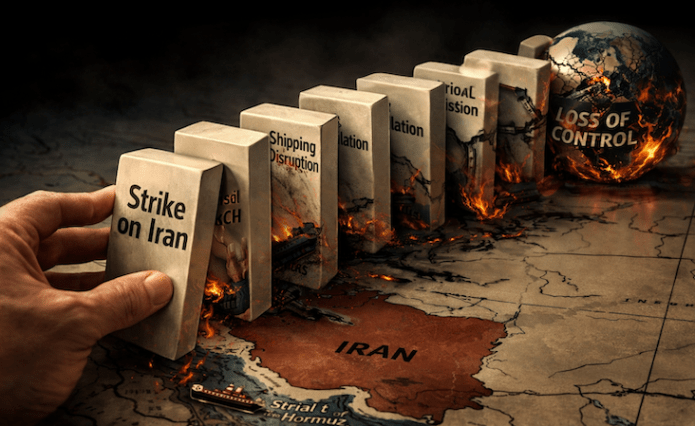
After more than a month of war against Iran, a revealing paradox has emerged. The United States and Israel, two of the most powerful military actors in the world, have demonstrated their overwhelming force and destructive capacity. Yet neither has achieved a decisive strategic outcome. Iran did not break. Under sustained attack and extraordinary pressure, it remains standing, retaliating, adapting and this resistance is increasingly becoming central to the global geopolitical narrative surrounding the conflict. 

What is unfolding in Iran looks more and more like a case study in strategic risk miscalculation and a lesson about how a war launched as a supposedly controlled demonstration of force to gain leverage can quickly degenerate into self-expanding systemic disruptions with mounting spillovers and global unpredictable risks consequences.

Now the central question is no longer whether Washington and Tel Aviv can keep inflicting damage to Iran. Of course they can. The critical issue is whether this war is still strategically winnable on politically acceptable terms and whether the original justification for war was ever sound in the first place.

Now today’s news reports confirms that the conflict has now moved into a precarious two-week ceasefire phase after Trump stepped back from his latest threats, but the core disputes remain unresolved and the truce itself is fragile. 

That matters because this war is no longer just a war. It is a stress test of strategic judgment, use of coercive power, alliance credibility, and global economic resilience.

Continue reading

The AI REVOLUTION: The Great Human Enhancement or Replacement: Are We Ready?

Artificial Intelligence (AI) is no longer a futuristic concept, it is here in our present reality, transforming industries, economies, and societies at an unprecedented pace. The launch of ChatGPT (GPT-3.5) by OpenAI in November 2022 was a watershed moment, accelerating AI adoption across sectors such as healthcare, finance, manufacturing, and other services. AI-powered automation is rapidly reshaping business and operating models, redefining the job markets, and sparking intense global competition among corporations and nations. 

While AI presents immense opportunities for business and operational innovation, productivity and growth, it also poses extraordinary risks and challenges. These include concerns over job displacementregulatory gapsethical dilemmasprivacy erosion, and cybersecurity vulnerabilities. Companies and governments now face a critical challenge:

How to harness AI’s potential for transformational growth while mitigating its disruptive impact on human societies? This is one of the most defining challenges we face for the future of humanity.

Continue reading

The ‘Peasant’ Remark: How Not to Negotiate with China – Risk Management Lessons

In the aftermath of the 2025 U.S. tariff escalation, tensions with China have reached a boiling point not just economically with tit-for-tat responses from the Beijing, but also diplomatically and even more deeply in the cultural space. While President Trump’s sweeping tariffs may have been intended to force a global trade reset by pushing world leaders to renegotiate trade agreements seen as unfair by the US administration, recent comments from Vice President J.D. Vance far from encouraging constructive discussions, have on the contrary, added significant fuel to an already volatile fire.

In a high-profile speech, Vance referred to the Chinese as “peasants from whom the U.S. borrow money to buy the goods the chinese peasants manufacture” adding that “it is not a recipe for economic prosperity”.  The reaction from Beijing was immediate and angry. The Chinese Foreign Ministry condemned the remark as “ignorant and impolite.”

Continue reading
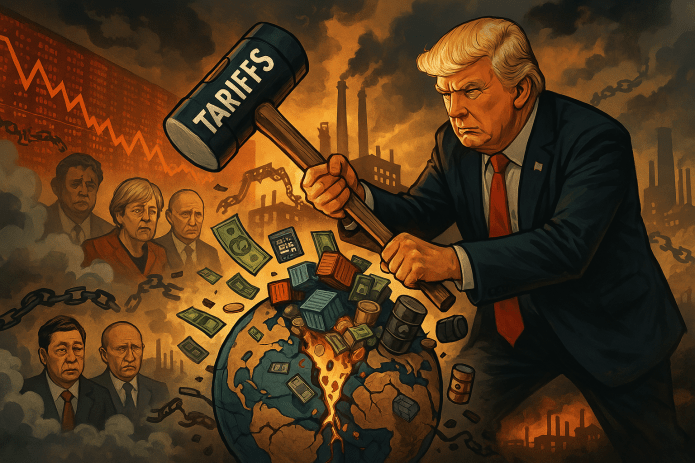
Impacts of Trumps Tariffs on the world

Reassessing Trump’s Tariffs from a Risk Management Perspective: A Reckless Gamble or Necessary Disruption?

In April 2025, President Donald Trump stunned global markets and diplomatic circles by announcing sweeping tariffs ranging from 10% to nearly 100% on imports from virtually all countries. Dubbed “Liberation Day” tariffs by the U.S. administration, the move triggered an immediate and intense backlash. Politicians, media pundits, and economists around the world denounced the action as reckless, economically unsound, and potentially disastrous for the global economy.

But such a one-dimensional, knee-jerk reaction may itself be dangerously shortsighted. From a risk management perspective, it is precisely in moments like this, when established norms are shaken, that we must resist emotional reactions and instead engage in cool-headed analysis. We need to pause, reflect, and ask deeper questions:

Continue reading
Voting does not count

A DEMOCRATIC BREAKDOWN IN EUROPE

A Case Study of the 2024/2025 Romanian Presidential Election 

What happens when the clear frontrunner in a presidential election is prevented from running when the election is abruptly cancelled just days before the second round of the vote?

This isn’t a scene from a political thriller. It’s the reality unfolding in Romania, a member of the European Union (EU). The 2024/25 Romanian presidential election presents a sobering case study that raises questions not only for Romania’s democratic health but also about some broader, troubling trends affecting the state of democracy across the EU.  While European nations continue to promote democratic values abroad, events like these raise serious concerns about the democratic integrity at home. Let’s look into it.

Continue reading