show the link between nutrition and chronic diseases

Confronting the Looming Global Health Crisis: A Flywheel of Chronic Diseases Getting out of Control?

Introduction: The New Silent Pandemic

For most of human history, the primary threats to human life came from infections, accidents, and wars. Today, the biggest killers are chronic diseases such as obesity, diabetes, heart disease, cancer, and mental illnesses which now account for over 75% of global deaths.

Unlike the wars or pandemics of the past, which used to strike with acute and visible devastation but were often geographically confined, this health crisis has crept in silently, escalating slowly at first, building year after year until it now threatens to overwhelm healthcare systems, economies, and even entire societies worldwide.

What makes this coming crisis so insidious is that it is largely a man-made problem and one that could have been prevented if we had conducted a proper risk diagnostic and taken the right preventive actions from the start. Yet, instead of tackling its root causes, governments and healthcare institutions still today remain locked in a vicious cycle of focusing primarily on the consequences and managing them with treatments that do not solve the underlying problem and hence lead to more treatments feeding an endless cycle going nowhere. 

Continue reading
The ‘Peasant’ Remark: How Not to Negotiate with China – Risk Management Lessons

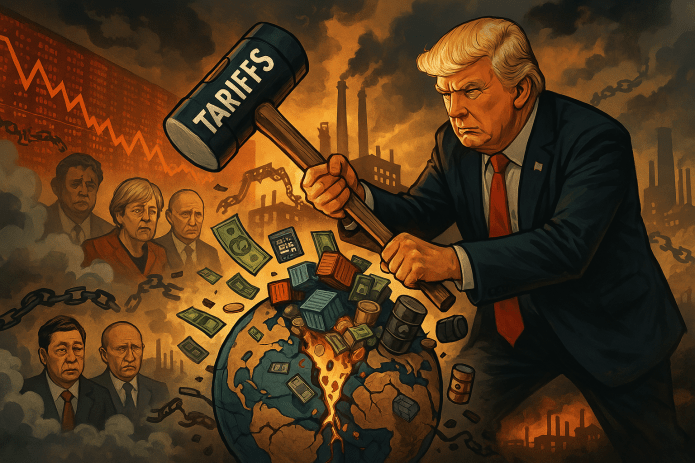
In the aftermath of the 2025 U.S. tariff escalation, tensions with China have reached a boiling point not just economically with tit-for-tat responses from the Beijing, but also diplomatically and even more deeply in the cultural space. While President Trump’s sweeping tariffs may have been intended to force a global trade reset by pushing world leaders to renegotiate trade agreements seen as unfair by the US administration, recent comments from Vice President J.D. Vance far from encouraging constructive discussions, have on the contrary, added significant fuel to an already volatile fire.

In a high-profile speech, Vance referred to the Chinese as “peasants from whom the U.S. borrow money to buy the goods the chinese peasants manufacture” adding that “it is not a recipe for economic prosperity”.  The reaction from Beijing was immediate and angry. The Chinese Foreign Ministry condemned the remark as “ignorant and impolite.”

Continue reading
Impacts of Trumps Tariffs on the world

Reassessing Trump’s Tariffs from a Risk Management Perspective: A Reckless Gamble or Necessary Disruption?

In April 2025, President Donald Trump stunned global markets and diplomatic circles by announcing sweeping tariffs ranging from 10% to nearly 100% on imports from virtually all countries. Dubbed “Liberation Day” tariffs by the U.S. administration, the move triggered an immediate and intense backlash. Politicians, media pundits, and economists around the world denounced the action as reckless, economically unsound, and potentially disastrous for the global economy.

But such a one-dimensional, knee-jerk reaction may itself be dangerously shortsighted. From a risk management perspective, it is precisely in moments like this, when established norms are shaken, that we must resist emotional reactions and instead engage in cool-headed analysis. We need to pause, reflect, and ask deeper questions:

Continue reading
Voting does not count

A DEMOCRATIC BREAKDOWN IN EUROPE

A Case Study of the 2024/2025 Romanian Presidential Election 

What happens when the clear frontrunner in a presidential election is prevented from running when the election is abruptly cancelled just days before the second round of the vote?

This isn’t a scene from a political thriller. It’s the reality unfolding in Romania, a member of the European Union (EU). The 2024/25 Romanian presidential election presents a sobering case study that raises questions not only for Romania’s democratic health but also about some broader, troubling trends affecting the state of democracy across the EU.  While European nations continue to promote democratic values abroad, events like these raise serious concerns about the democratic integrity at home. Let’s look into it.

Continue reading

HRM Awards 2011, What is ‘Hot’ and what is ‘Not’.

I was last Friday (4th of March) invited to present the Singapore HRM award 2011 for “Best Change Management Practices” to the winner of this year contest. This year’s winner: Kraft Food Singapore managed to beat on the line MOM, ANZ, NOKIA and a few more organizations of the same league. Continue reading

The challenges of Entrepreneurship

I just wrote an article on Entrepreneurship entitled:

NOTHING VENTURED, NOTHING GAINED! It has been published on one of Singapore famed entrepreneur’s portal, Nanz Chong-Komo at Nanzinc.com (Nanzinc.Com is a website for Asian entrepreneurs to gather and find information and support for their business).

EntrpreneurshipThe Motto title of my article encapsulates the fact that you can’t get anywhere and succeed in anything in life unless you’re willing to take risks. Obviously it means that you have got to be ready to make mistakes and fail with sometime very painful consequences. Opportunity and Risk are the two face of the same coin and hence must be managed in an integrated manner. In this article I explore the too often ignored relationship between creating value and risk management. And why no taking risk management seriously is Gambling your assets away.

Follow the link to read the full article.

What is Risk?

The First step in understanding Risk Management and Decisions about Risk is to try to understand RISK itself! This is a challenging undertaking, a even though everybody may have an ‘idea’ of what risk is, when you ask them to define it precisely, most people will find it very difficult. Continue reading

The Risk Management ‘Explosion’

In the wake of a string of catastrophic events such as economic crises (Asian financial crisis, Dot-com Bubble, etc.), major corporate failures (Enron, WorldCom) and the rise of new risks and uncertainties (epidemics, terrorism,), organizations all over the world are now facing increasing and conflicting pressures from their stakeholders Continue reading